A Stimarium Dossier
Hot water can start freezing first
A hotter cup of water can begin forming ice before a cooler one. Water can stay liquid below zero, and a hot cup can change how it loses heat. Even deciding whether two laboratories have repeated the same experiment takes care.
What’s known, what’s not: Known, Our read, Open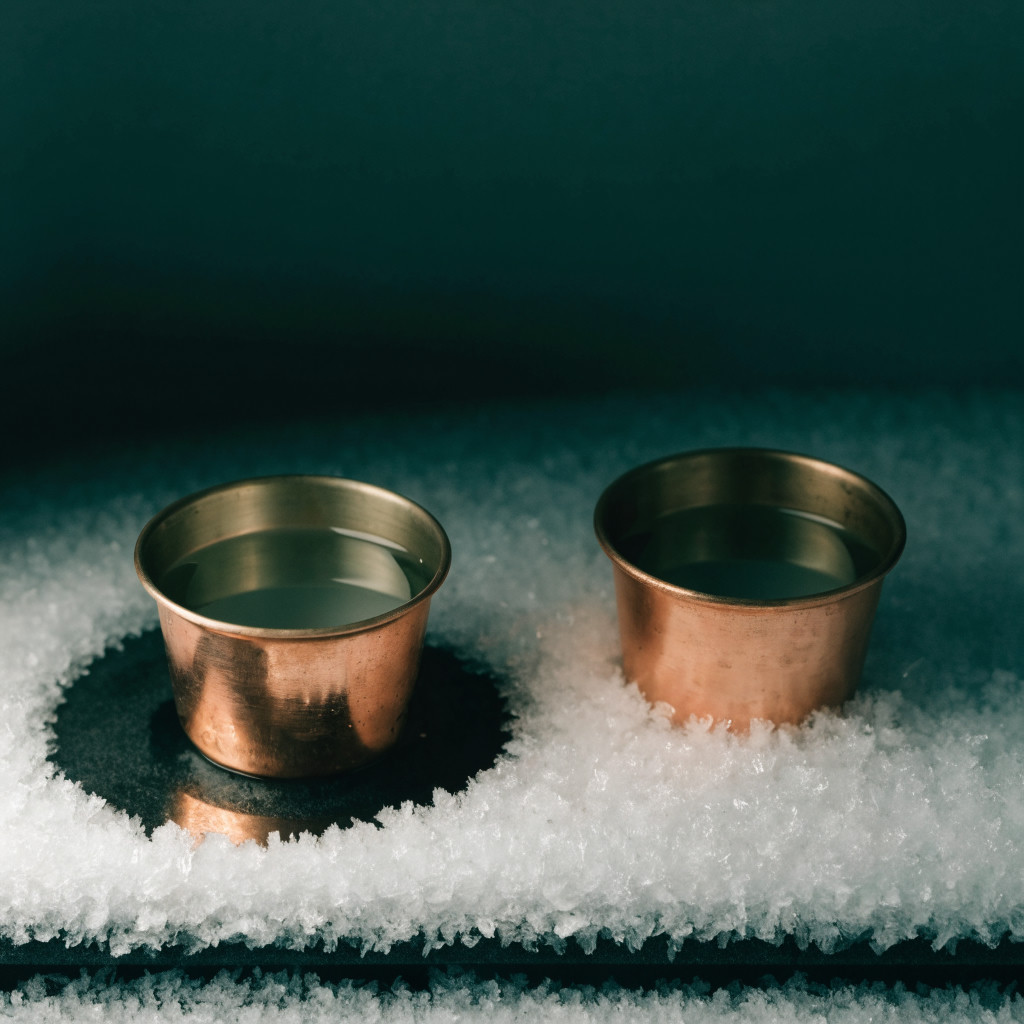
The objection seems airtight
Imagine putting equal amounts of hot and cold water into a freezer. Which starts freezing first?
The cold water seems certain to win. The hot water must first pass through the cold water’s starting temperature. By then, the cold sample should be farther along.
Yet experiments have recorded the hotter sample beginning to freeze first, an observation known as the Mpemba effect. It happens under particular conditions; heating water is no dependable shortcut to ice cubes. The puzzle is why an experiment so easy to picture has been so difficult to pin down. [S01]
Start with what the stopwatch means
Water can remain liquid below 0 °C. This is supercooling. Ice needs a starting point: a small crystal that can grow. Dust or features of the container’s surface can help it get started. [S01]
An initially colder sample can keep cooling below zero while another sample starts forming ice. Its head start on losing heat does not guarantee a head start on crystal formation. Supercooling provides one route to a hotter-first result, rather than a single explanation for every report. [S01, S02]
Reaching zero, beginning to form ice and becoming completely solid are different events. Agreeing on which one stops the clock is essential. It still does not settle the whole dispute.
A centimetre can change the answer
In 2016, Henry Burridge and Paul Linden studied cooling rather than the full freezing process. They found no convincing advantage from starting hotter and questioned whether earlier reported advantages were distinguishable from experimental variation. [S03]
Their measurements exposed a surprisingly small source of trouble. Different heights within a sample could have different temperatures. A mismatch of just one centimetre in the heights being compared could make their data appear to show a hotter-first cooling result. The apparent advantage depended on where the thermometers read. [S03]
“The temperature of the water” sounds like a single property. In a cooling container, a reading at one spot may not represent the whole sample. That problem exists before any ice forms. [S03]
Later experiments found crossings
In 2022, a team led by Zhiqiang Tang reported hot and cooler samples’ temperature curves crossing while both remained above zero. In their covered test tubes, a probe in initially hotter water could end up reading below the probe in initially cooler water. The authors reported five repetitions of selected comparisons. [S04]
Those are claims about liquid cooling, so the disagreement cannot all be explained by different meanings of “frozen.” A crossing above zero does not, however, establish that the hotter sample subsequently reached zero first, began forming ice first or became solid first.
Tang’s team cooled its tubes in a bath of ethanol, a kind of alcohol, held at −20 °C. Burridge and Linden used freezer-air and cold-plate arrangements. These were different physical experiments, with different routes for heat to leave. Container geometry also affects how water circulates inside. [S03, S04]
Those differences are reasons to investigate further before reaching a verdict. The thermometer problem established in the 2016 apparatus is not proof that Tang’s group made the same error. Nor does a reported crossing in another apparatus overturn every result of the earlier study.
The hot cup can change its own conditions
An experiment by James Brownridge makes the difficulty of holding conditions fixed visible. Two copper cups sat on frost inside a freezer. The hot cup melted frost beneath itself, improving its thermal contact with the floor. Heat could then escape through a different contact than it did beneath the cold cup. When Brownridge put the cups on an insulating support instead, the cold water began freezing first. [S02]
In this apparatus, the hotter cup changed its own thermal contact. The insulating support interrupted that route for heat to leave.
If the question is whether a hotter cup can win in a freezer, the changed contact matters. If the question is whether the water has a special cooling advantage with heat-transfer conditions held fixed, the same observation cannot settle it. A useful control tells us which claim the experiment can support.
A winner does not identify the cause
In a 2026 chest-freezer study, Anna Janni and colleagues collected 176 sample measurements across 25 trials. Some hotter samples reached zero or began forming ice before at least one initially colder sample in the same trial. But their fitted measures of how effectively samples cooled showed no increasing trend with initial temperature. The authors attributed the reversals to variable heat transfer and differences in supercooling. [S05]
Those findings separate two questions that the familiar riddle merges. Did a hotter sample win this comparison? And did starting hotter give it a dependable advantage? Observing the first does not establish the second.
The current review of the field describes several physical routes to hotter-first behavior in water. The single name covers experiments whose physical processes and conditions can differ. A general explanation must say which route is operating and when it should disappear. [S01]
What has to survive the repeat
Our read is that the experiment’s familiarity conceals its complexity. We can picture two cups instantly; we cannot infer from that picture where their heat will leave, which part a probe will measure or where ice will begin.
So ask what another laboratory would have to keep the same. Two cups can look like a repeat long before they amount to one.
Think with the idea.
Compare two questions
Compare “Can a hotter cup win in this freezer?” with “Does hotter water have an advantage under fixed cooling conditions?” What would you have to control differently?
One reliable hotter-first result can establish possibility; a dependable advantage requires repeatable comparisons.Challenge the explanation
If melting frost is doing the work, insulating the cups from the frost should remove that route. What other change would distinguish a proposed cause from an incidental detail?
A prediction for testing an explanation, not a claim that frost explains all Mpemba observations.What’s known, what’s not
↑ Back to where you were- Water can remain liquid below zero; reaching 0 °C and starting to form ice are different endpoints. [S01]
- A 2016 experiment showed that a one-centimetre thermometer-height mismatch could create an apparent hotter-first cooling result. [S03]
- Tang’s team reported hotter samples becoming cooler than initially colder samples above 0 °C, with five repeats for selected settings. [S04]
We think the next step is to pin down the conditions that make a hotter-first result happen again. The apparent simplicity of two cups hides a difficult test of cause.
- Which details are necessary to reproduce Tang’s reported above-zero crossings in an independent laboratory?
What the three labels meanClose explanations
Known marks what the cited evidence directly supports, including what named researchers argue.
Our read is Stimarium’s own interpretation of that evidence.
Open marks a question the cited evidence can’t answer yet, or a possibility we are raising ourselves.